Lobby and Front Desk Security in Orlando
Nexus Security Firm staffs lobby and concierge desks in Orlando buildings with licensed officers who check credentials, hold the visitor log and know who to call. Dispatch is staffed 24 hours a day, every day.
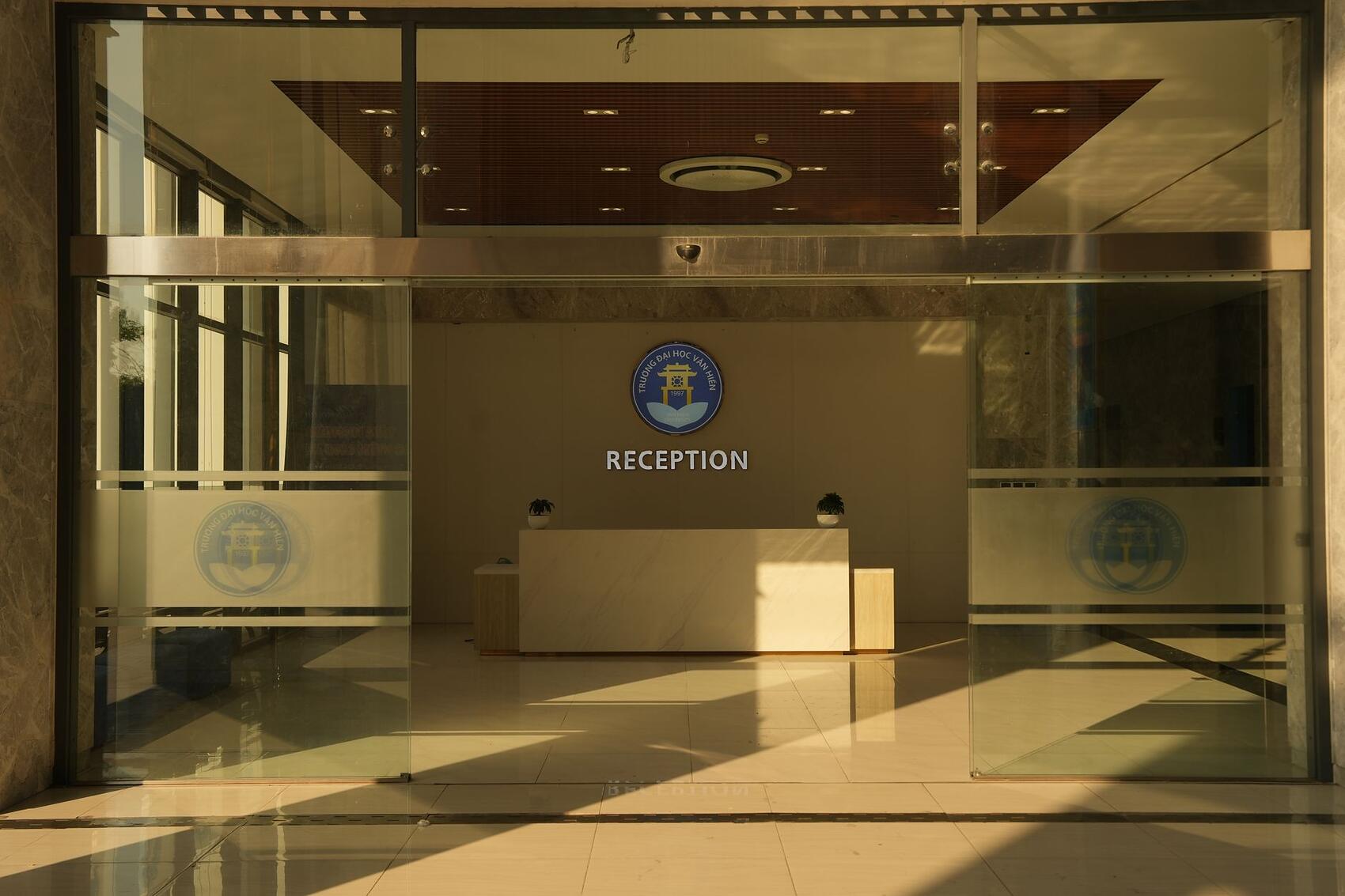
What the officer at the desk is responsible for
A front desk post is an access control job done by a person. The officer verifies that arrivals belong in the building, signs visitors in and out, issues and collects badges, notifies the host, keeps the log, controls after hours entry, and refuses entry where the rules you wrote say to refuse. On a tenanted building the same desk handles deliveries, contractors and agency staff, so there is one record of everyone inside.
The second half of the job is judgment. A person arrives without an appointment and will not leave. An employee under a restraining order is expected at the door. A delivery driver wants to walk a package to a floor. A terminated employee returns for belongings. The desk is where those arrive first, and the post orders written for your building say what the officer does with each of them and who gets called.
Staffing a desk of this kind is Chapter 493 guard work. Nexus Security Firm performs no installation, service, design or remote monitoring of access control, camera or alarm equipment, since that falls under a separate Florida certification. Our officers work the desk your building already has.
Who puts an officer on the front desk
Multi tenant office buildings are the largest group, usually because there is no record of who is in the building and a tenant has started asking. A single incident is often the trigger: someone wandered onto a floor, a laptop went missing from a suite, a tenant employee was followed in.
Corporate headquarters and single occupier buildings buy the desk for a different reason, which is process. They want a consistent arrival experience, visitor badges that come back, a contractor sign in that satisfies an internal audit, and somebody on the door during a redundancy or a termination.
The third group is buildings that already employ a concierge and have found the role does two jobs badly. A concierge greeting guests and handling packages is not positioned to refuse entry to a person who will not take no, and separating the two roles or putting a licensed officer in the seat resolves it. Orlando drew 76.7 million visitors in 2025 (Visit Orlando), and downtown and International Drive buildings carry unfamiliar faces as a normal condition, which makes an unstaffed lobby a genuine gap.
What a desk officer has to be, beyond licensed
A desk post is the most public assignment in this trade, and the officer is the first person every tenant, client and visitor meets. That changes the selection. An officer at a front desk needs presentation, clear speech, patience with a queue and the composure to refuse someone politely in front of an audience.
Uniform is set with you. A blazer and tie post suits a Class A lobby and a corporate headquarters; a standard uniform suits a building that wants the presence to be obvious. Both officers hold the same Florida Class D license backed by 40 hours of FDACS approved training (FDACS Division of Licensing).
Desk posts are almost always unarmed, and that is the right default: the work is credential handling, presence and escalation. Where a building has a specific risk profile, such as a tenant in a high risk trade or a documented history of armed incidents at the address, an armed officer holds a Class G license with 4 hours of firearms requalification each year of the two year cycle (FDACS Division of Licensing) and bills roughly $8 to $12 an hour above unarmed. On a corporate lobby, the liability argument against arming is usually stronger than the case for it.
The overnight desk problem, and how the post is built against it
The anxiety every buyer of a 24 hour desk has is whether the officer is awake at 4am, and it is a fair question. Officers who describe sleeping on post trace it to back to back doubles and to nobody supervising the overnight, far more often than to the individual in the chair.
So the arrangement is where this gets fixed. Posts are staffed from a scheduled roster, open shifts are the agency responsibility to fill instead of a double for the officer already on duty, and a supervisor attends the post across the rotation including the overnight. Dispatch is staffed 24 hours a day, every day, so a call out at 2am reaches a person who can act on it rather than a voicemail box.
The other half is the tour. An overnight desk with a written rotation, a check the officer has to make somewhere else in the building and a handover to the morning shift is a post with structure in it. A desk with nothing to do between midnight and 6am is a post designed for failure, and where a building has no overnight activity we will say that a patrol pass costs less and does more.
What a staffed desk costs in Orlando
A desk post runs about $24 to $34 an hour unarmed in Central Florida, and armed posts $32 to $46. Coverage is what sets the annual figure: a business hours desk, five days a week, is roughly a quarter of the cost of a continuously staffed 24 hour lobby, which needs four or more officers to cover a week.
The build is public: Florida officer wages run $14 to $18 an hour unarmed and $18 to $26 armed (ZipRecruiter, Salary.com and Indeed, August 2026), bill rates run 1.5x to 2x the wage, the officer takes about 70% of the rate and roughly 10% is indirect cost (Belfry Software, 2026). General liability and workers compensation insurance, supervision, uniform and training come out of the balance.
Specific to a desk: a blazer and tie presentation post prices above a standard uniform post because the candidate pool is narrower, a bilingual requirement moves it, and so does any expectation that the officer handles a phone system, a package room or a visitor management workflow. Overnight and weekend hours sit at the top of the band, as do single short shifts.
Checking the license behind a front desk officer
Two licenses matter and both are public. The agency license is the company one: Nexus Security Firm holds FDACS Class B agency license B 1900066, searchable on the FDACS Division of Licensing lookup with its class, status and dates. The officer license is individual: a Class D for unarmed work, built on 40 hours of FDACS approved training, and a Class G for armed work with 4 hours of firearms requalification each year of the cycle.
The reason to check both is that a desk is the one post where an unlicensed person is easiest to place. A building manager sees somebody in a blazer behind a counter and reasonably assumes the rest. Ask for the agency number, and ask that officers on your contract hold current Class D licenses.
The same discipline applies to anyone offering to supply the equipment at the door. Installing and servicing access control and alarm systems in Florida requires an alarm system contractor certification, a credential entirely separate from a security agency license, and it is fair to ask for that number too.
Posts often combined at one property
These are the posts most often written into the same property agreement.
Putting an officer on your desk
Four steps from the first call to a staffed lobby, with the rules of the desk agreed in advance.
-
Describe the building and the desk
Tenant mix, arrival volume, hours, whether the desk handles packages or a phone system, and what has happened that prompted the call.
-
Walk the lobby
A supervisor sits the desk position, looks at sightlines, entry points that bypass the lobby, the after hours door and where a difficult conversation would happen.
-
Desk orders and rate
Written orders cover credential rules, the visitor and contractor procedure, refusals, the escalation tree, the uniform standard and the rate with its factors.
-
Post starts with supervision
Officers begin on the agreed schedule, a supervisor attends across the rotation including overnights, and incidents are documented and sent to your building contact.
Ready to start? Call (407) 706-3431 or Request Coverage.
Why buildings put our officers on the desk
Rules written before the awkward arrival
The desk orders say what happens when a person will not leave, when a delivery driver wants floor access, when a terminated employee returns, and who gets called in each case. Buyers describe the generic security offer as the reason vendor selection is so hard, and a desk with no written rules produces an officer making confident decisions your tenants never agreed to.
Desk orders agreed in writing before the first shift.
Overnight posts that are supervised
A supervisor attends the post across the rotation, overnights included, and open shifts are filled from the roster instead of landing on the officer already on duty. Officers themselves attribute sleeping on post to back to back doubles and absent overnight supervision, and with industry turnover at 77% in 2024 (ASIS International), the scheduling around a post is what keeps it staffed properly.
Industry turnover reached 77% in 2024 (ASIS International).
A guard license, printed and checkable
Nexus Security Firm holds FDACS Class B agency license B 1900066 under Florida Chapter 493, public on the FDACS lookup, and officers carry their own Class D licenses built on 40 hours of FDACS approved training. Staffing an access control desk is squarely within that license. Equipment installation, service, design and remote monitoring sit under a separate Florida certification, and we neither hold it nor sell it.
FDACS Class B agency license B 1900066.
What Reddit Says About Lobby and Front Desk Security in Orlando
The subject guards themselves return to most often is the overnight desk. Sleeping on post comes up repeatedly, and the people describing it are consistent about the cause: back to back doubles and no supervisor attending the overnight, more than the character of the person in the chair. Guards describe supervisors knowing about an open shift for days without arranging cover, leaving the officer on duty to absorb a sixteen hour double.
Buyers come at it from the other side. The vetting advice that repeats is to ask who supervises this post, how often they physically attend including overnight, and what happens when an officer calls out an hour before shift. Business owners also describe searching for security and getting the blandest possible results, which is why a desk contract is worth discussing in specifics: hours, uniform, refusal rules, escalation.
Property managers add a point that applies directly to a lobby. People see something and say nothing, sometimes for days, often because they do not want to be identified as the person who reported it. A staffed desk is the lowest effort reporting channel a building can have, since telling the officer on the way past costs a tenant nothing.
Those findings shape how a desk post is written here, starting with the supervision and the relief arrangement.
A common call about an unstaffed lobby
The situation: A typical call from the facilities manager of a downtown Orlando building with six tenant suites and a lobby that nobody sits in. A visitor walked to a fourth floor suite and into a conversation they should not have heard, a tenant reported a laptop missing from a meeting room the same month, and the cleaning contractor has been letting people in through the service door. Tenants have started asking what the building is doing.
What gets done: The property walk shows the lobby is only half the problem: the service door and the garage elevator both bypass it. The scope written is a single unarmed desk officer from 7am to 6pm on weekdays, with desk orders covering credential checks, visitor badges that get collected at exit, a contractor sign in that includes the cleaning crew, a refusal script for arrivals with no appointment, and a call tree naming who at the building is contacted for each category of incident. The service door is added to a tour the officer walks twice a shift, and the garage elevator lobby gets a mirror check on the same rotation. No overnight post is quoted, because nothing reported has happened after hours.
How it turns out: The badge log becomes the useful artifact: within a month the building knows who its regular contractors are, and the cleaning company is issued fixed credentials. Tenants start telling the officer things they had not been putting in writing, including an ongoing issue with a former employee, which gives the building a chance to act before it becomes an incident. The building keeps the post at weekday hours, since the after hours picture stayed quiet.
Front desk security questions
What building managers ask before putting a licensed officer at the lobby desk.
Call (407) 706-3431